Advanced Controllers for Lower-limb Prostheses Enhancing Agility
Project Goal
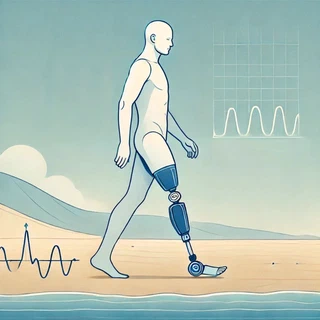
This project develops human-in-the-loop adaptive control systems for prosthetic devices that enhance user mobility and stability across varied terrains.
Key Contributions
- Dynamic Adaptive Control Design: Developed intelligent prosthetic controllers that dynamically adapt parameters in real time to suit changing surface conditions and individual user needs.
- Predictive Surface Transitioning: Formulated predictive models using neural and kinematic signals to anticipate transitions to compliant terrains during gait, ensuring smooth, uninterrupted locomotion.
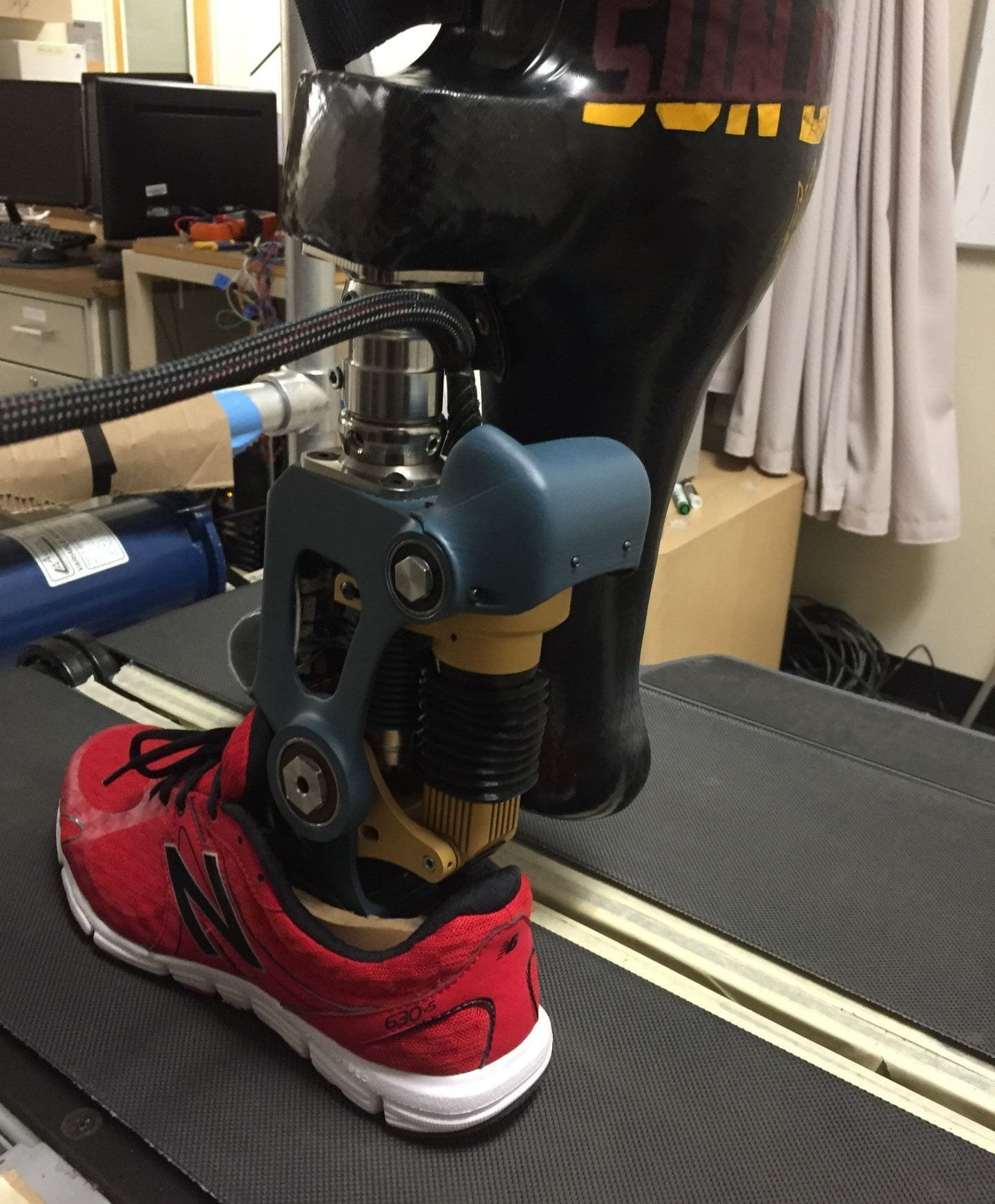
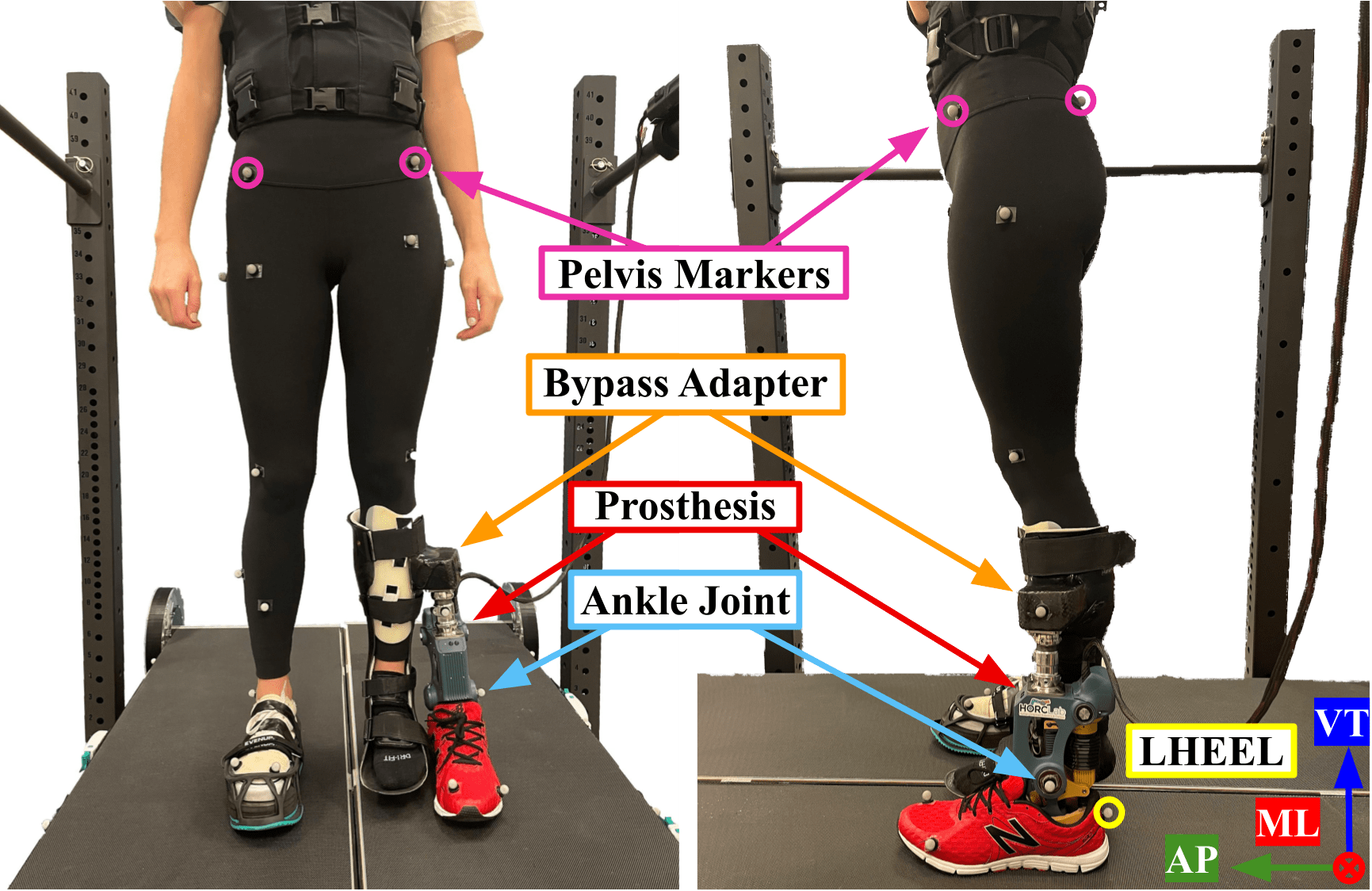
- Terrain-Adaptive Stiffness Modulation: Implemented real-time ankle-foot stiffness tuning to enhance user balance, stability, and agility over soft, uneven, or compliant surfaces.
Media & Experimental Demos
Selected Publications
(see Publications for a complete list)
On Predicting Transitions to Compliant Surfaces in Human Gait via Neural and Kinematic Signals
Charikleia Angelidou and Panagiotis Artemiadis IEEE Transactions on Neural Systems and Rehabilitation Engineering, 31:2214-2223, 2023. [PDF]Adjusting the Quasi-Stiffness of an Ankle-Foot Prosthesis Improves Walking Stability during Locomotion over Compliant Terrain
Chrysostomos Karakasis, Robert Salati and Panagiotis Artemiadis In the Proc. of the 2023 IEEE/RSJ International Conference on Intelligent Robots and Systems (IROS), Detroit, MI, USA, pp. 2140-2145, 2023 [PDF]On the Effects of Visual Anticipation of Floor Compliance Changes on Human Gait: Towards Model-based Robot-Assisted Rehabilitation
Michael Drolet, Emiliano Quinones Yumbla, Bradley Hobbs and Panagiotis Artemiadis
In the Proc. of the 2020 IEEE International Conference on Robotics and Automation (ICRA), pp. 9072-9078, 2020. [PDF]
Funding & Acknowledgments
This work has been supported by the following grants:
- NSF: 2020009, 2015786, 2025797, 201890
- Any opinions, findings, and conclusions expressed are those of the authors.